The time is now! Sign up for 2026 San Antonio Combat PTSD Conference, premier meeting on military psychological health
STRONG STAR News
Aug 21, 2026
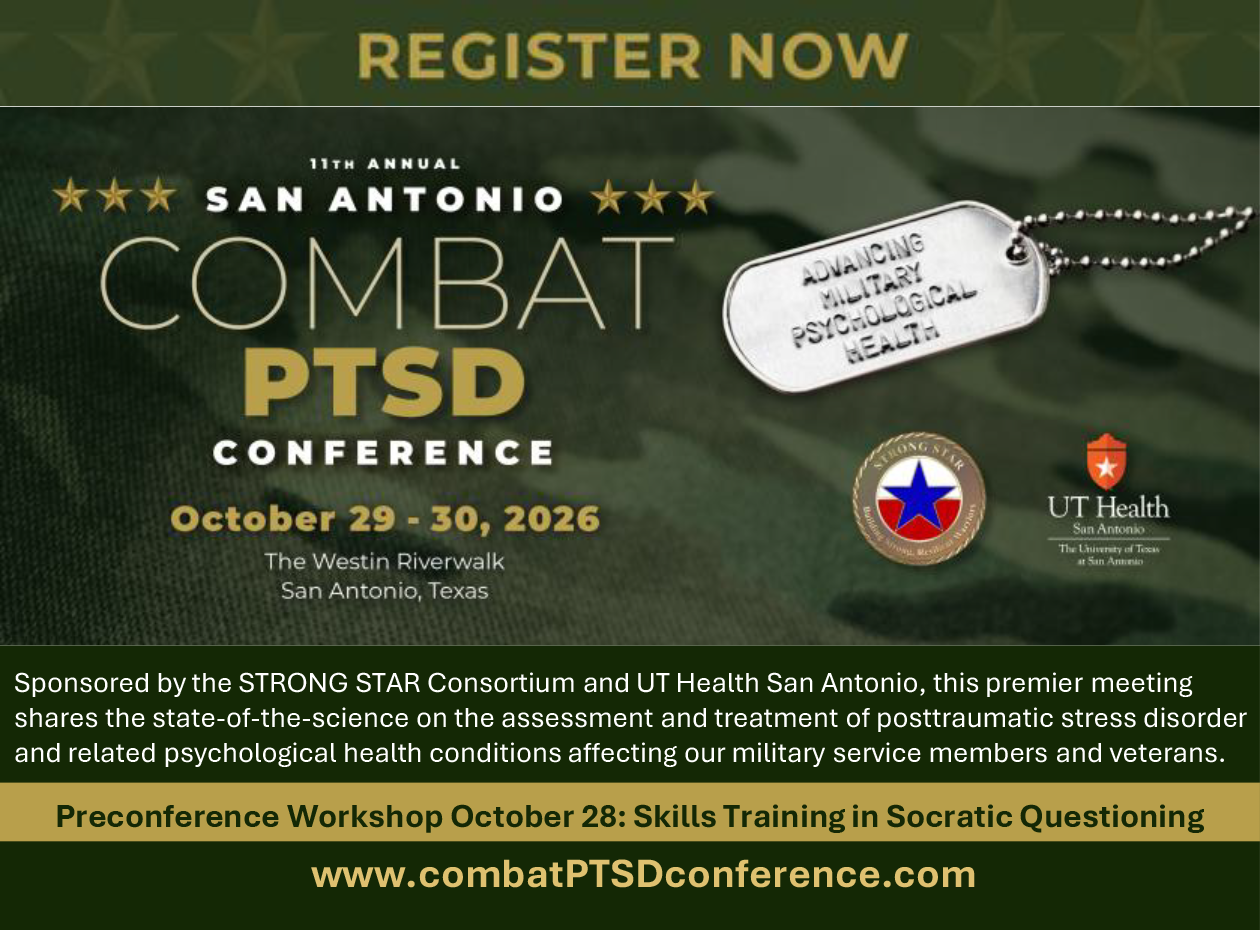
With registration underway, it’s time to grab your spot at the 11th Annual San Antonio Combat PTSD Conference, to be held Oct. 29-30 in downtown San Antonio at The Westin Riverwalk. Recognized as the premier scientific gathering on military psychological health, the popular event is expected to attract high attendance for its two-day conference, as well as for a pre-conference workshop on Oct. 28 that will offers skills training for clinicians, so people are advised to register early.
The annual gathering is put on by the STRONG STAR Consortium and UT Health San Antonio, the academic health center of The University of Texas at San Antonio. Each year, it attracts an international audience that includes researchers, clinicians, leaders and policy makers within the Department of War and the Department of Veterans Affairs as well as from academic institutions and the civilian sector. Numerous military personnel, veterans and community members with an interest in the mental health needs of our nation’s warfighters also join the proceedings, as do students and professional trainees.
All come together to hear about the latest advances in the treatment of post-traumatic stress disorder and commonly co-occurring conditions that affect military service members and veterans.
“We’ll hear about the promise of and findings with novel treatments or therapy enhancements, practical approaches to delivering care to patients and training clinicians in evidence-based treatments, and emerging needs and challenges posed by current military conflicts,” said Alan Peterson, director of STRONG STAR and professor with the UT San Antonio Long School of Medicine.
“In addition to that,” Peterson said, “we’ll draw inspiration in our work from the stories of heroic veterans such as retired Col KC Kelly, our ‘Profiles in Resilience’ speaker, and from personal interaction with professional colleagues as we discuss how to push our field forward.”
The two-day conference also is a great opportunity for continuing education, offering 12 CE credits for licensed providers. A separate, half-day, pre-conference workshop on Oct. 28 at the UT San Antonio downtown campus is geared toward clinicians. It offers skills training in trauma-focused Socratic questioning, a powerful tool for promoting PTSD recovery, and 4 CE credits.
Conference program highlights
The “Profiles in Resilience” address that kicks-off the conference on its first morning is always a highlight of the event. This year, attendees will hear from Kim “KC” Campbell, who retired from the U.S. Air Force as a colonel after 24 years as a fighter pilot and senior military leader. In 2003, she was awarded the Distinguished Flying Cross for Heroism after successfully recovering her battle-damaged airplane after an intense, close-air support mission. Her address will focus on factors that helped her overcome trauma and include lessons about leadership, vulnerability, and courage.
The second day of the conference will take attendees to the frontlines in Ukraine, as the keynote address and complementary presentations describe the physical and psychological impact of modern warfare on military members and civilians, challenges and successes related to training in and the delivery of evidence-based PTSD treatments, and opportunities to identify those at heightened risk and intervene with preventive measures to enhance resilience.
An exciting series of presentations over the two-day conference will be shared by researchers exploring new frontiers in treating PTSD and related conditions: brain stimulation to reset disrupted networks; vagus nerve stimulation to help reduce involuntary stress and fear responses related to PTSD; the incorporation of ketamine to help make PTSD treatment more effective; the use of AI to help individuals predict headaches so they can take steps to reduce risk for or better deal with them; and other innovations.
Other experts will speak on the neurocognitive impacts of PTSD in service members and youth, burnout among therapists, innovative strategies for optimizing and adapting treatment, and approaches to improve outcomes related to suicide prevention, anger, and aggression.
A reception and poster session at the end of the first day will provide updates on a broad variety of topics in military psychological health as it offers attendees time for networking and professional camaraderie.
“The San Antonio Combat PTSD Conference is a unique event that brings together a diverse audience with a shared stake in advancing the field of military psychological health for the good of service members, veterans, and their families,” said Peterson.
Partnership makes it possible
Peterson thanked the conference sponsors, whose contributions support the event and help keep registration fees down. “Particular thanks goes to the Bob Woodruff Foundation,” he said. “A partner with STRONG STAR in multiple initiatives, they have continued to serve as the presenting sponsor for the San Antonio Combat PTSD Conference since its early years. Their support is vital to its success.”
The Bob Woodruff Foundation raises awareness about the tough challenges veterans and military families are facing and invests in solutions to help support them in the next chapter of their lives.
“The Bob Woodruff Foundation is proud to support the San Antonio Combat PTSD Conference,” said Emily Bader, senior director of grantmaking. “The conference complements the foundation’s work supporting evidence-based approaches to treating PTSD and co-occurring conditions and helps attendees understand the science behind combat-related PTSD — knowledge that is critical to improving how we screen for and treat PTSD,” she said.
For additional information about the conference, the pre-conference workshop, registration, and CE credits, visit www.combatPTSDconference.com.